The questions parents actually ask.
Choosing where your child spends their time is a real decision. Here are straight answers to the things parents genuinely worry about - whether they'll enjoy it, what happens if they struggle, how you'll see progress, and what it costs - for one Coding & Robotics pathway, ages 7-18, in Leicester.
Every child, met where they are.
Will my child actually enjoy it?
Because they build real things.
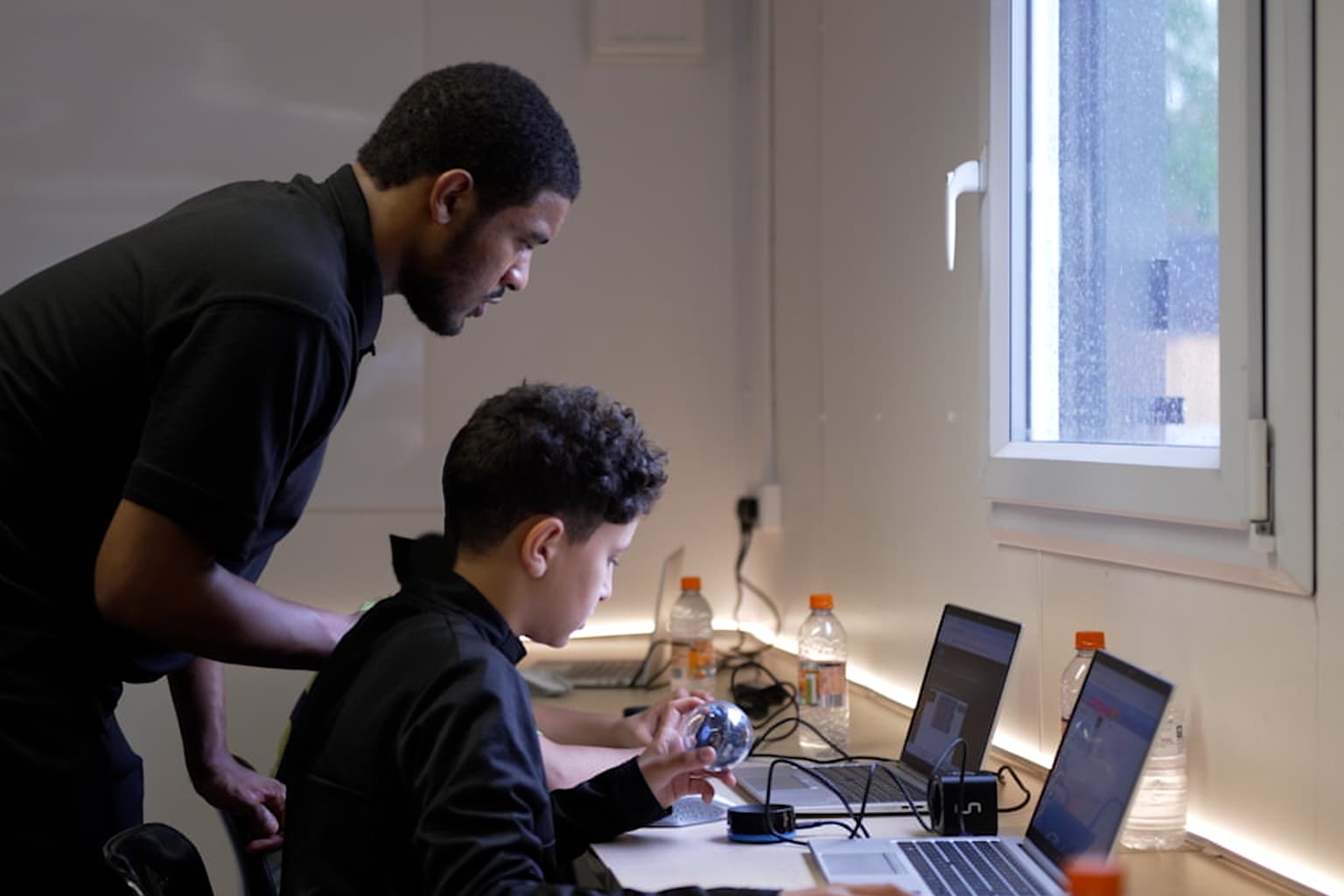
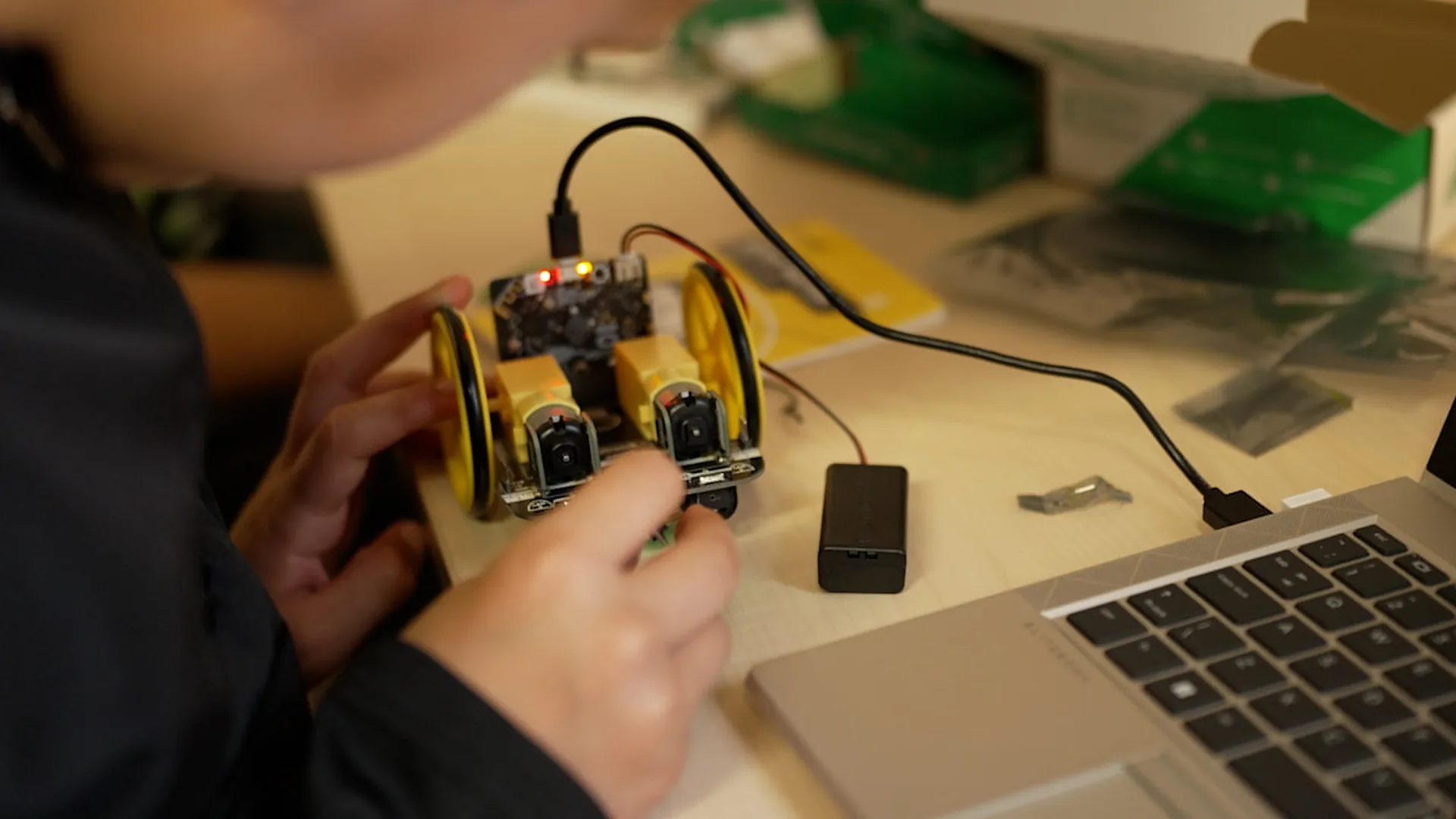
Every session is built to end with something your child made and can show off - a working program, a robot that moves. No worksheets: they'll be programming real robots in a small group, and they'll have the same friendly mentor each week. Enjoyment isn't the bait - it's how the learning sticks.
What happens if they struggle?
No one will be rushed, and no one will be left behind.
Your child will start at the right level - set by a short assessment, not their age - and will work at their own pace, with a supported version of every task. A child never moves up a band until they can do it unaided, so gaps don't get papered over. Classes are capped at eight, every class will have a mentor and an assistant, and getting stuck is treated as part of getting good, not a failure.
What if they're already advanced?
They won't sit through what they already know.
Their starting band is set by the highest challenge they can complete independently, so an advanced child simply starts higher. Progression is by capability, never by age - and beyond the top band there's competition robotics, advanced projects, a deeper introduction to AI, GCSE Computer Science preparation, and even a route to becoming an assistant instructor.
What if my child has additional needs?
Talk to us - the pace will be set per child.
Every task comes in a supported version, the room is designed to be calm and low-sensory, and the pace is set per child rather than per class. We're a young academy and we won't overpromise formal provision - so the best first step is to ask for a free trial lesson and tell us about your child - we'll call you within 24 hours and talk their needs through with you before you commit to anything.
Hands-on, structured, and founder-led.
How much screen time is involved?
Less than parents expect - and it's the active kind.
A lot of the work is physical: building and programming real robots, testing them, watching them move - and, higher up the pathway, wiring real electronics. The coding happens on screen, but the two-hour session is structured - build, break, rebuild, show - so it stays hands-on and social, not a child alone at a monitor. As they progress into typed Python the screen share grows, but robotics keeps them building with their hands throughout.
Is it more hardware or software?
Deliberately both.
Children will write real code and build and wire real robots and electronics. Early on it leans physical and block-based; as they climb the pathway they add typed Python, sensors and autonomy, so the software share grows as they do. The code always controls something real - and that's what makes it stick.
How are different ages managed?
Three age-matched versions of one course.
Younger children (7-10) are aligned to Key Stage 2, and older ones (11-15) to Key Stage 3 and a pathway toward GCSE Computer Science - both taught the same capabilities in age-appropriate ways. A Juniors programme (16-18) takes the same pathway furthest, and is not running yet - join the waiting list and we will be in touch. Children are grouped by age and ability, and always progress by what they can do, never by how old they are.
Who exactly is teaching them?
Founder-led - and a clear bar for every hire.
Hikora is founder-led by Redwaan Maxamed (IT & cybersecurity) and Tarik Mokthar (operations, architecture and STEM tutoring). We're still growing the teaching team, and the bar is set before anyone is hired: every adult who works with a class will hold an enhanced DBS check and first-aid training before they work with children, and will be chosen for real industry experience as well as the patience to teach it. Your child will have the same mentor each week, with an assistant in the room - so the person teaching them will already know where they got stuck last week.
Real proof, and skills built to outlast the course.
How will I know they're progressing?
You'll see it, not just be told it.
Your child will earn a coloured wristband at each of eight bands - and each band splits into quarters: the first three each earn a dated certificate recording exactly what they can now do, and the fourth earns promotion and the next wristband. A band will only be awarded once a mentor has watched them do it unaided, and you'll get a progress update so you can see precisely how they're getting on.
What will they have after the first term?
Concrete, dated proof - not a vague promise.
The first term is built to leave them with a first real project they built themselves, their first stripe certificates - and, at their own pace, their first wristband - plus growing confidence. We won't promise a fixed outcome by a fixed date: progress is by capability, and every child moves at their own pace. But you'll have real, dated proof of what your child can do, and the momentum to keep going.
Why this over sport, tutoring or another club?
It's a pathway, not a pastime - and it complements the rest.
It's a structured academic route, aligned to the national curriculum and toward GCSE Computer Science; it's built around a genuinely future-shaping skill set - code, robotics and AI; and it's designed to grow durable, transferable skills like problem-solving, resilience and communication that carry across school and life, not just at a keyboard.
How much does it cost?
Pricing is confirmed in full before you enrol - with no obligation.
We don't publish a single price, because the right starting band differs for every child. At the free trial lesson we'll walk you through the programme, the timetable and the pricing in full before you decide, with no obligation to enrol. The trial lesson itself is free and commits you to nothing.
A method, not a club.
Every project a child builds with us runs through the same five steps. It is how a hobby becomes a habit, and a habit becomes a skill.
Think deeply
Understand the problem before touching a keyboard.
Build boldly
Make the thing. Real code, real hardware, no worksheets.
Test rigorously
Find out what breaks, and why. Failure is data here.
Present with clarity
Stand up and explain it. Confidence is taught, not hoped for.
Reflect and grow
What would you do differently next time? Then do it.
No commitment
See if Hikora is right for your child.
Book your child's free trial lesson - we'll call you within 24 hours to agree a Saturday time. It's free, and it commits you to nothing.
Classes are capped at eight, and run weekly and at weekends in Leicester.