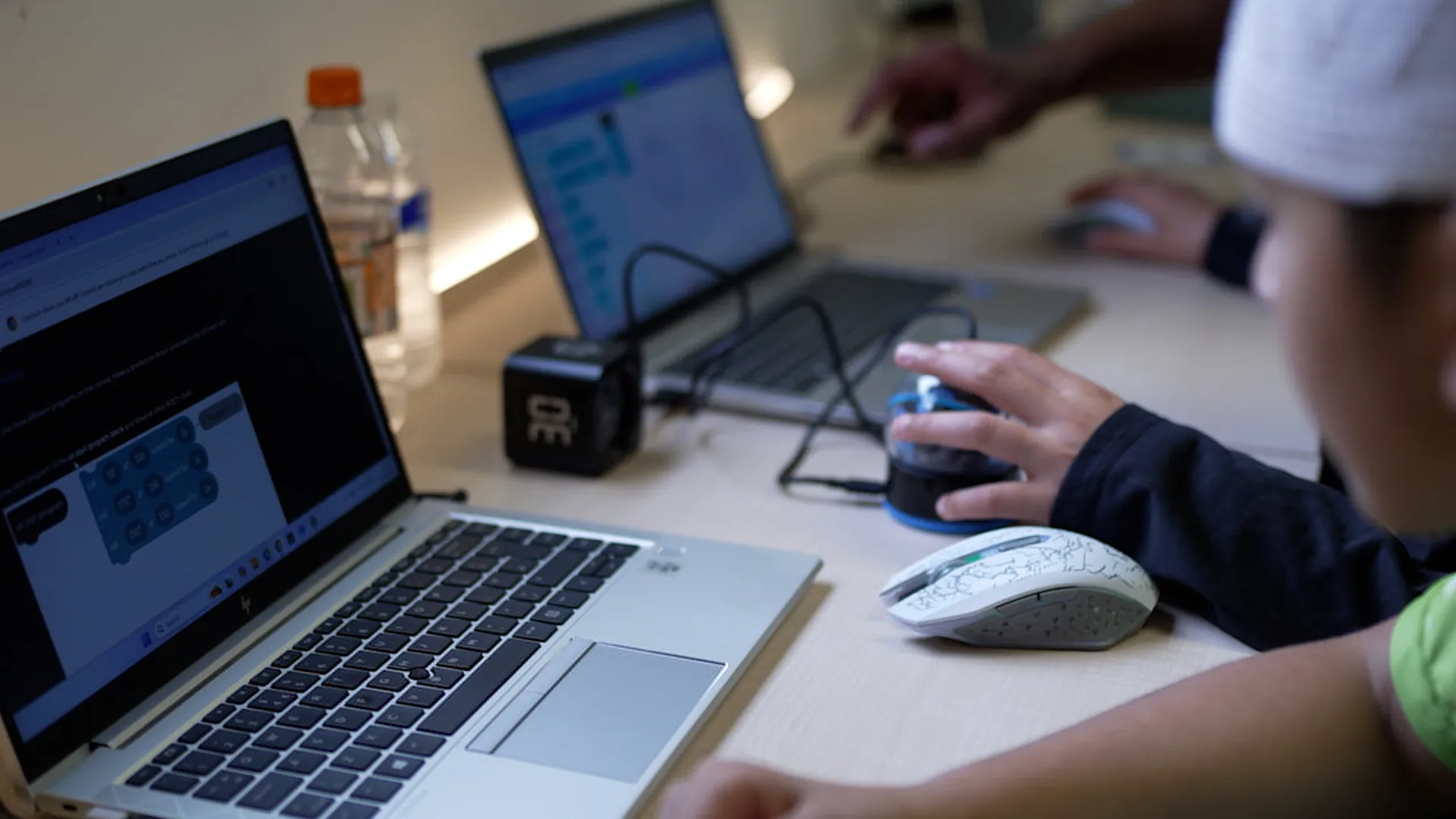
Coding isn't about turning every child into a programmer - it's about giving them the literacy to shape the technology that will shape their lives.
From reading the world to writing it
For most of human history, literacy meant one thing: the ability to read and write. It was the line between people who could take part in the conversation of their age and people who could only listen in. We don't think twice about it now. We teach every child to read, not because we expect them all to become novelists, but because reading is the floor beneath everything else they will learn.
Something similar is happening with technology, and it is happening fast. Our children are growing up inside software. They learn through it, socialise through it, and will almost certainly earn a living alongside it. Yet for most of them it remains a black box: they are fluent users of devices they could not begin to explain.
Coding is what closes that gap. It is the difference between reading the digital world and being able to write in it. And as technology shifts from something we use to something we work alongside, that difference starts to look less like a nice extra and more like a basic form of literacy.
Why understanding the build beats knowing the buttons
Knowing how to use an app is a perishable skill. Interfaces change, platforms rise and fall, and the clever shortcut a child masters today may be gone by the time they finish school. Understanding how technology is built, by contrast, lasts. It carries across to whatever comes next.
When a child learns to code, they aren't really memorising one language or one tool. They're discovering that the apps, games and websites around them were made by people - people who made choices, set rules, and sometimes got it wrong. That single realisation is quietly powerful. It turns a passive consumer into someone who asks, "How does this actually work, and could it work differently?"
That question sits behind almost every meaningful job of the coming decades, technical or not. The doctor weighing up an AI diagnosis, the lawyer challenging an algorithm's decision, the small-business owner automating their accounts - none of them need to be expert programmers. But all of them are better off if technology is something they can interrogate rather than simply obey.
It isn't only for the "maths kids"
There's a stubborn myth that coding belongs to one type of child: quiet, logical, brilliant at maths, destined for a screen-lit career. It puts off a lot of parents, and a lot of children too. It is also wrong.
At heart, coding is storytelling with logic. You decide what should happen, break it into steps, test it, watch it fail, and fix it. That loop - imagine, try, debug, improve - is far closer to creative writing or building with Lego than to a maths exam. The children who fall for it are just as often the artists, the storytellers and the relentless question-askers as the ones who race through their times tables.
Our curriculum is designed around coding as a way of thinking rather than a single subject. It rewards curiosity over cleverness and persistence over natural talent. A child learns that a mistake isn't a verdict on their ability; it's simply information about what to try next. That mindset stays useful long after the specific code is forgotten - whether they grow up to design buildings, run a business, write music or, yes, build the next piece of software the rest of us depend on.
Why starting young matters
Children are natural builders. Give a seven-year-old a way to make a character move across a screen and they don't see "computer science" - they see a toy they can bend to their will. That sense of play is exactly when the deepest learning happens, before anyone has told them that coding is supposed to be hard, or meant for someone else.
Starting young isn't about rushing children towards careers. It's about giving an idea time to settle in gently. The earlier a child feels the small thrill of making something work - of being the one who built it, not just the one who played it - the more naturally that confidence grows. By the time the stakes feel real, in their teens and beyond, technology is familiar ground rather than a foreign country.
It also widens the door. When children meet coding early and without pressure, fewer of them quietly conclude, "that's not for someone like me." The aim isn't a generation of programmers. It's making sure no child rules themselves out of the most important toolset of their lifetime before they've had a proper go.
Handing every child the pen
We can't know which jobs today's seven-year-olds will do, which tools they'll reach for, or which technologies will define their thirties. That uncertainty can feel daunting. But it is also the strongest case for teaching the underlying literacy rather than chasing any one skill.
A child who understands how technology is built will always be able to learn the next thing. They'll meet new tools as something to understand and shape, not fear or blindly trust. In a world being rewritten by code and artificial intelligence, that may be the most future-proof gift we can offer.
This is exactly why Hikora exists. We teach coding and robotics, with introductory AI, to 7-18 year-olds here in Leicester - not to turn out programmers, but to hand every child the pen, so they can help write the world they're going to live in, whatever path they choose. The future is being built right now. Our job, and yours, is to make sure our children are among the people building it.
Want this for your child?
Hikora is a tech academy in Leicester, teaching coding and robotics, with introductory AI, to 7-18 year-olds.