You can't prepare a child for a specific future job, but you can raise an adaptable creator who is unafraid to learn - and that is the most future-proof skill of all.
The job your child will love may not have a name yet
Here is a thought worth sitting with. Some of the most sought-after roles of the last decade - app developer, social media manager, data scientist, prompt engineer - simply did not exist when today's parents were leaving school. Nobody could have studied for them, because there was nothing to study.
The same thing is happening again, only faster. Artificial intelligence is reshaping how work gets done in almost every field, from medicine and law to design, farming and film. New tools arrive every month. Whole categories of work are being rewritten in real time.
This can feel unsettling. If we cannot name the jobs of 2040, how do we prepare a seven-year-old for them? The reassuring answer is that we don't prepare them for a job at all. We prepare them for change itself - and that is something you can absolutely do.
Why narrow skills age faster than they used to
For a long time, the safe path was simple: learn one specialised skill deeply and ride it for a career. That logic is weakening. When a skill is narrow and repeatable, it is exactly the kind of thing software learns to do well - quickly and cheaply.
We have already watched this play out. Work that once took a trained professional an afternoon can now be drafted in seconds. That isn't a reason for fear, but it is a reason to think differently about what we teach children.
The skills that hold their value are the broad, human ones: asking good questions, breaking a messy problem into steps, judging whether an answer is actually right, and combining ideas from different fields into something new. These don't go out of date when the tools change. If anything, they grow more valuable, because someone still has to decide what to build and whether it is any good.
Put simply, we want to raise children who can learn the next thing - not just children who have learned this thing.
Teaching children to work with AI, not against it
There is an understandable worry that AI will compete with our children for the work of the future. A more useful way to see it is this: the children who thrive will be the ones who treat AI as a tool - a remarkably capable assistant they can direct with confidence.
Think of the difference between a passenger and a driver. The passenger is carried along and has little say in where things go. The driver understands the machine, sets the direction and stays in control. We want our children in the driving seat.
That means learning what these tools are good at, where they get things wrong, and how to check their output rather than trust it blindly. A child who can write a line of code understands what software really is. A child who has built a game knows that behind every clever system sits a chain of human decisions. That understanding is what turns AI from something mysterious into something they can command.
What adaptable young creators actually practise
Adaptability can sound like a vague virtue, but it is built from concrete habits - and they can be learned young.
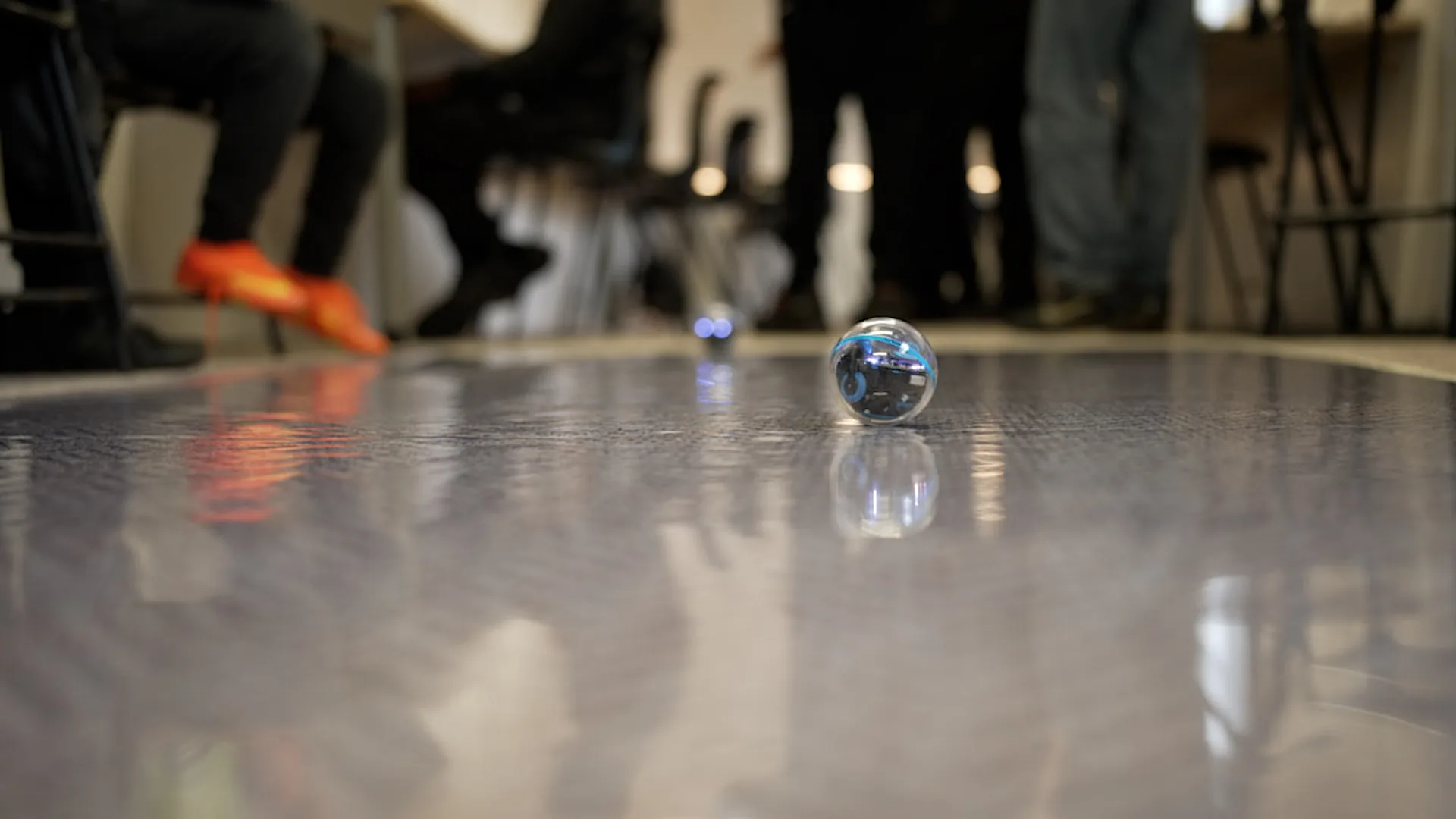
The first is comfort with not knowing yet. When a child builds a robot that won't move or a game that keeps crashing, they discover that being stuck is the ordinary middle of any project, not a sign of failure. They learn to debug: to stay calm, find the problem and try again. That single habit transfers to every field there is.
The second is creative confidence - the belief that they can make things, not only consume them. A young person who has shipped a working app, animated a character or trained a simple model has felt the quiet pride of building something real. That feeling makes them want to build the next thing.
The third is the ability to learn quickly and learn out loud: to pick up a new tool, explain their thinking and work alongside others. In a world where the tools keep changing, knowing how to learn is the one skill that never expires.
Where to begin - and why hope beats fear
You do not need to predict the future to prepare your child for it. You need to give them room to make things, break things and work out how the technology around them actually fits together. Curiosity, patience and a few hours spent building something real go a long way.
Plenty of this can happen at home. Encourage the questions, celebrate the messy first attempts, and treat screens as a place to create rather than only to watch. And where you would welcome some structure and guidance, that is exactly why Hikora exists - to give young people in Leicester a calm, hands-on place to learn coding and robotics, with introductory AI. Classes are capped at eight, every instructor will be DBS-checked before they teach, and we hire mentors against one test above all: that they care about how a child grows, not just what they make.
The jobs of tomorrow may not exist yet. But the children who will fill them are sitting at our kitchen tables right now. Raise a curious, confident young creator who is unafraid to learn, and you have prepared them for a future none of us can fully name - which is, in the end, the most hopeful thing of all.
Want this for your child?
Hikora is a tech academy in Leicester, teaching coding and robotics, with introductory AI, to 7-18 year-olds.